Start with the logbook
Review cross-country PIC time, instrument experience, knowledge-test preparation, and any currency goals before building the next sequence of lessons.
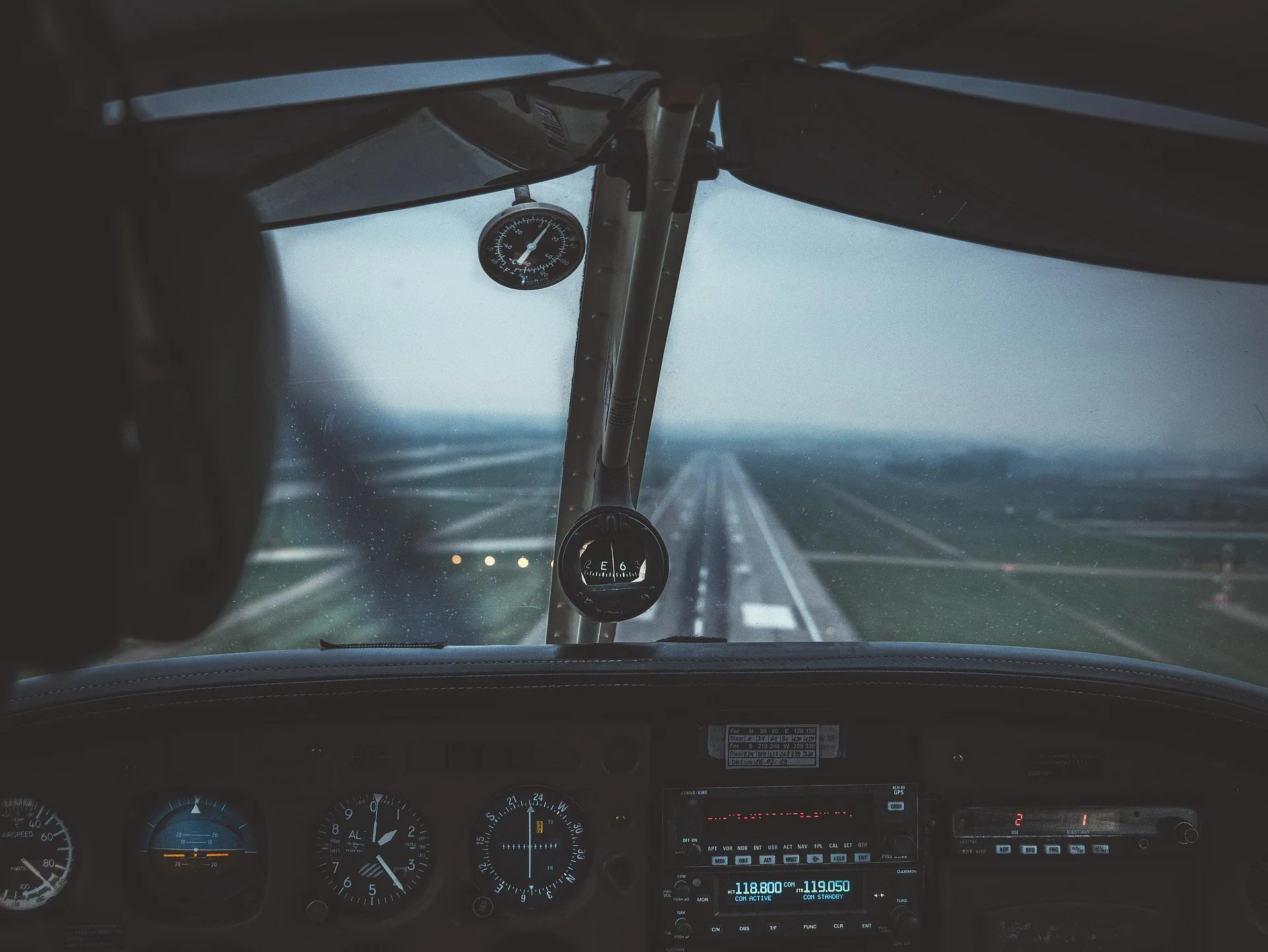
An instrument rating (IR) allows you to fly legally in clouds, low visibility, and IFR (Instrument Flight Rules) conditions — making you a significantly safer and more capable pilot. FAA requirements to earn an instrument rating: hold a Private Pilot Certificate, log 50 hours of cross-country PIC flight time, complete 40 hours of actual or simulated instrument time, pass the FAA Instrument Airplane Knowledge Test, and pass an instrument rating checkride (oral + flight) with a Designated Pilot Examiner.
Van Nuys Airport is an exceptional base for instrument training in Los Angeles. KVNY has an ILS approach, a VOR/DME, and RNAV GPS approaches on both runways. The surrounding airspace — Burbank Approach, SoCal Approach, the LA Class B transition routes — gives instrument students real-world exposure to the ATC environment that instrument-rated pilots use every day. You are not flying practice approaches in empty airspace; you are operating in the real IFR system.
At Accelerated Flight School, instrument rating training is conducted by our CFII instructors. Lessons are structured around real-world IFR operations: IFR clearances and departure procedures, en-route navigation, holding patterns, ILS and RNAV approaches, partial-panel flying, and unusual attitude recovery. Most students complete the instrument rating in 4–7 months after finishing their private pilot certificate.
The instrument rating has a prerequisite that catches some pilots off guard: 50 hours of cross-country pilot-in-command time. The efficient move is to accumulate that time deliberately while you finish or right after your private certificate, so it is already in your logbook when formal instrument training begins and is not paid for at the higher dual rate.
When the instrument lessons start, much of your instrument time can be flown simulated — under a hood with your CFII as safety pilot — which lets you train productively even on clear days and at lower cost than waiting for actual conditions. Pairing that with steady scheduling keeps your scan sharp and your total hours down.
Training out of Van Nuys, you build those skills against real clearances and the ILS, VOR, and RNAV approaches in the area. Plan roughly 40–60 hours of instrument instruction in the fleet aircraft starting at $165/hr dual, and less if you choose a more affordable airplane. Call or text 424-493-2761 to map your route to the rating.
Instrument students at our Van Nuys flight school need more than time under a hood. Accelerated Flight School helps pilots turn their current experience into an organized IFR plan, with each dual instruction session connected to the instrument FAA/ACS tasks.
Review cross-country PIC time, instrument experience, knowledge-test preparation, and any currency goals before building the next sequence of lessons.
Lessons can combine clearance review, avionics setup, holds, approaches, missed approaches, and a useful debrief—not isolated button pushing.
The instructor uses mock oral and flight scenarios to identify weak tasks before recommending the instrument rating checkride.
Training from Van Nuys Airport (KVNY) puts Los Angeles pilots in the Los Angeles ATC environment. Real radio work, route planning, and approach briefings help make an instrument certificate/rating practical beyond the checkride.
As checkride readiness approaches, the school plans examiner coordination early and targets a checkride within 1–2 weeks after training is complete when examiner schedules, weather, and eligibility allow. This is a planning target, not a guarantee: independent DPE availability and checkride outcomes remain outside the school's control.
Van Nuys Airport is one of the busiest general aviation airports in the United States — and one of the best environments to earn a pilot certificate.
KVNY has a live tower, ILS approaches, and year-round high-traffic conditions. You learn real-world radio communication from lesson one.
Training here means working with Burbank Class C, LA Class B, and diverse terminal area procedures — preparation for flying anywhere in the country.
The San Fernando Valley's inland location provides consistent VFR training conditions, particularly compared to coastal marine-layer airports.
From KVNY you can fly cross-country to Santa Barbara, Camarillo, Bakersfield, Big Bear, Brackett, Long Beach, and beyond — building real navigation skills.
No commercial airline traffic competing for runway time. KVNY is a dedicated GA airport built around pilots like you.
FAA Designated Pilot Examiners (DPEs) are available in the Van Nuys area for all certificates and ratings.
No fuel surcharges. No hidden fees. No large upfront training loans required. Pay as you fly.
From your first discovery flight through your commercial certificate and flight instructor rating — all based at Van Nuys Airport.
Accelerated Flight School is built around a straightforward principle: efficient, structured training that respects your time, your money, and your goals.
Every lesson objective maps directly to the FAA's Airman Certification Standards — the exact document your checkride examiner will use. No filler flights.
You are never wondering when you will be ready. Your instructor tracks your progress against checkride standards and gives you a clear picture at every stage.
Your instructor debriefs every flight with specific observations. What you did well, what needs work, and exactly what your next lesson will address.
No large training loans required. No large prepaid blocks. You schedule and pay per lesson, keeping your investment proportional to your progress at all times.
No runaround, no scripted upsell sequences, no inflated hours. Our instructors teach because they believe in the mission of aviation training done right.
Train twice a week or twice a month — your schedule, your pace. The instruction quality does not change based on how fast you progress through the program.