Commercial Multi-Engine Add-On Training
Already have your Commercial Single-Engine certificate? Add multi-engine privileges — no FAA written exam required. Train until you're proficient, typically 10–15 hours of dual flight.
No upfront payment — pay as you fly per hour
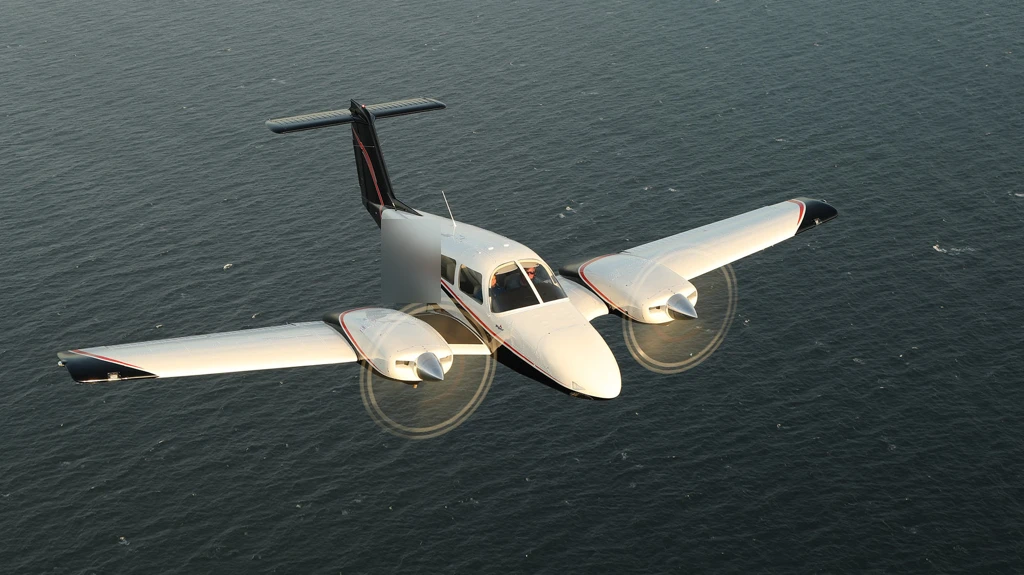
Learn multi-engine flying in the Seminole
The Piper PA-44 Seminole is a widely used multi-engine trainer. Counter-rotating propellers mean it has no conventional critical engine, making engine-out handling more symmetrical and helping simplify the transition to twin-engine procedures. Asymmetric thrust, Vmc limitations and reduced engine-out performance still require careful training and compliance with the aircraft POH.
Aircraft: $360/hr cash/check or $373/hr credit card. Add $35/hr instruction: $395/hr cash/check or $408/hr credit card. Ten to fifteen dual hours cost $3,950–$5,925 cash/check, or $4,080–$6,120 by credit card. Ground instruction, examiner fees and checkride aircraft time are additional.
View aircraft and equipmentTraining Cost Estimate
Accelerated Flight School
$3,950 – $5,925
SoCal Average
$5,000 – $8,000
Most pilots complete the multi-engine add-on in 10–15 hours of dual instruction. There is no FAA-mandated minimum flight time for the add-on (unlike the initial commercial certificate) — you train until you are proficient and your instructor endorses you for the checkride.
No upfront payment — pay only for the hours you fly at our dual rate.
FAA Multi-Engine Add-On Requirements (Part 61)
Prerequisite
You must already hold a Commercial Pilot Single-Engine Certificate. The multi-engine add-on simply adds multi-engine privileges to your existing commercial certificate.
No Written Exam Required
Unlike the initial Commercial Pilot certificate, the multi-engine add-on does not require an FAA written knowledge test. You go straight to ground training and flight training with your instructor.
Training Requirements
Ground Training (with a MEI)
Multi-engine aerodynamics: increased performance, lift distribution, and handling differences vs. single-engine.
Engine-out aerodynamics: asymmetric thrust, Vmc (minimum control speed), and the critical engine concept.
Multi-engine systems: dual fuel systems, propeller controls, feathering, and engine synchronization.
Emergency procedures: engine failure at various phases of flight, single-engine approaches and go-arounds.
Multi-engine performance: climb rates, accelerate-stop distance, and single-engine service ceiling.
Flight Training (Dual — No Minimum Hours)
Normal and crosswind takeoffs and landings in the multi-engine aircraft.
Vmc demonstrations: establishing and recovering from minimum controllable airspeed with one engine inoperative.
Engine-out emergency procedures: identifying the failed engine, feathering the propeller, maintaining directional control.
Single-engine instrument approaches and go-arounds.
Engine-out landings: full-stop landings with simulated single-engine configuration.
Typical duration: 10–15 hours of dual flight time until checkride-ready.
Practical Test (Checkride)
The multi-engine add-on checkride is focused entirely on multi-engine operations. The examiner evaluates:
Vmc demonstrations and recovery.
Engine-out identification, feathering, and single-engine procedures.
Single-engine approaches and go-arounds.
Normal and emergency multi-engine checklists.
Multi-engine systems and aerodynamics (oral exam).
Paid directly to the examiner. No written exam fee for add-on ratings.
Why Add a Multi-Engine Rating?
Career Benefits
- Required for most charter and regional airline positions.
- Significantly increases the types of aircraft you can legally fly.
- Demonstrates a higher level of pilot proficiency to employers.
- Opens Part 135 commercial operations flying twin-engine aircraft.
PIC Time Building
On the airline path, reaching 1,500 hours of total flight time is the major milestone. After earning your Commercial Multi-Engine Add-On, you should aim to build at least 15 hours of Pilot in Command (PIC) time in the multi-engine aircraft. This multi-engine PIC time is valuable when applying to regional airlines and charter operators.
15 Hours Multi-Engine PIC
Target goal for airline path students after earning the add-on rating.
Checkride Scheduling Advantage
Multi-engine examiners are specialized, so we coordinate examiner planning early as you approach proficiency.
Checkride Timing Target
1–2 weeks
after training completion and readiness
Scheduling Conditions
Independent DPEs
weather and eligibility also apply
Accelerated Flight School coordinates examiner planning early and targets a checkride within 1–2 weeks after training completion and readiness when independent DPE schedules, weather, and eligibility permit. Timing is a target, not a guarantee; the school does not control DPE calendars or outcomes.